
EURO-3C convened session at EUCNC 2026 explores federated Telco-Edge-Cloud infrastructure for Europe
At EUCNC 2026, held at the FYCMA Trade Fairs and Congress Center of Málaga in Spain, EURO-3C hosted a convened session focused on the evolution of Europe’s first federated Telco-Edge-Cloud infrastructure. The session brought together representatives from industry, research and policy to discuss how the Connected Collaborative Computing Networks (3CN) vision is being translated into large-scale implementation.
The session took place on Wednesday, 3 June 2026, from 08:30 to 10:00 in Sala de Conferencias 1 (1.2), and was chaired by Miguel González-Sancho (Head of Unit, European Commission). He opened the session by outlining the policy relevance of federated computing infrastructures for Europe’s digital sovereignty and industrial competitiveness.
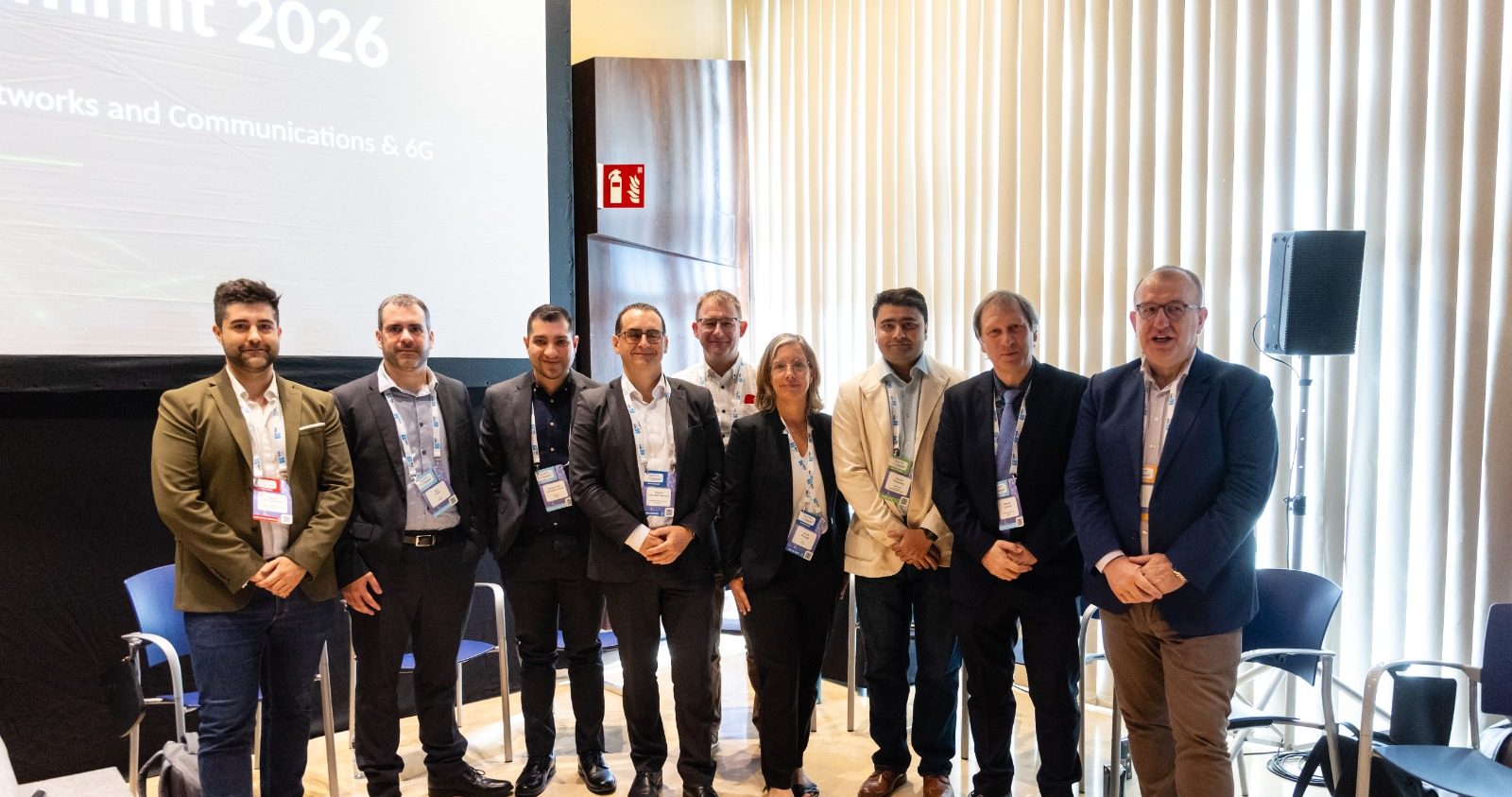
Miguel González-Sancho (Head of Unit, European Commission), Arturo Torrealba (EURO-3C Project Coordinator, Telefónica Innovación Digital SL), Manuel Lorenzo (Technical Manager, Ericsson), Souvik Sengupta (Sovereign Lead, IONOS), Silvia Almagia (Standardisation Lead, ETSI), Igor López Orbe (Vertical Transport Manager, CAF), Christos Verikoukis (Project Coordinator, SOVEREIGN-6G, ATHENA Research Center), and David Lund (Vertical PPDR Manager, PSCE Europe).
The technical overview of the EURO-3C pilot was presented by Arturo Torrealba (EURO-3C Project Coordinator, Telefónica Innovación Digital SL), who introduced the project’s overall architecture and federation approach across Telco, Edge and Cloud domains.
Manuel Lorenzo (Technical Manager, Ericsson) followed with a focus on the engineering challenges of large-scale orchestration and multi-domain integration across heterogeneous infrastructures.
Souvik Sengupta (Sovereign Lead, IONOS) addressed sovereignty requirements in distributed cloud-edge environments, highlighting the need for control, compliance and resilience in federated deployments.
Silvia Almagia (Standardisation Lead, ETSI) contributed the standardisation perspective, focusing on alignment with key frameworks including 3GPP, ETSI and GSMA Operator Platform initiatives, as well as open-source ecosystems such as Sylva, Nephio, Anuket and CAMARA.
Igor López Orbe (Vertical Transport Manager, CAF) presented the transport use cases, illustrating how federated infrastructures can support high-performance, safety-critical mobility systems.
Christos Verikoukis (Project Coordinator, SOVEREIGN-6G, ATHENA Research Center) provided a complementary research perspective on the convergence between EURO-3C and next-generation 6G and AI-native infrastructure developments.
David Lund (Vertical PPDR Manager, PSCE Europe) focused on public protection and disaster response requirements, underlining the importance of resilient and secure communications for critical services.
Across the session, discussions highlighted the importance of interoperability, scalability and trust in enabling a functioning European computing continuum. The exchange also reinforced EURO-3C’s alignment with broader EU initiatives, including IPCEI-CIS/MECT, SNS JU Streams, EuroHPC/AI Factories and the Open Internet Stack.
The session also featured a dedicated presentation from Christos Verikoukis (Project Coordinator, SOVEREIGN-6G, ATHENA Research Center), who introduced the SOVEREIGN-6G project. He outlined its ambition to build Europe’s first hybrid 6G Telco Cloud, integrating IT and networking into a highly automated, hardware-agnostic platform designed to ensure data privacy and reinforce Europe’s digital sovereignty. He also highlighted SOVEREIGN-6G’s work on a modular cyber defence platform based on open software and open hardware, incorporating zero-trust principles, advanced threat detection and secure integration into critical infrastructures. The approach aims to strengthen cyber resilience across public authorities, organisations and industry, while enabling shared threat intelligence to improve protection at sector level.
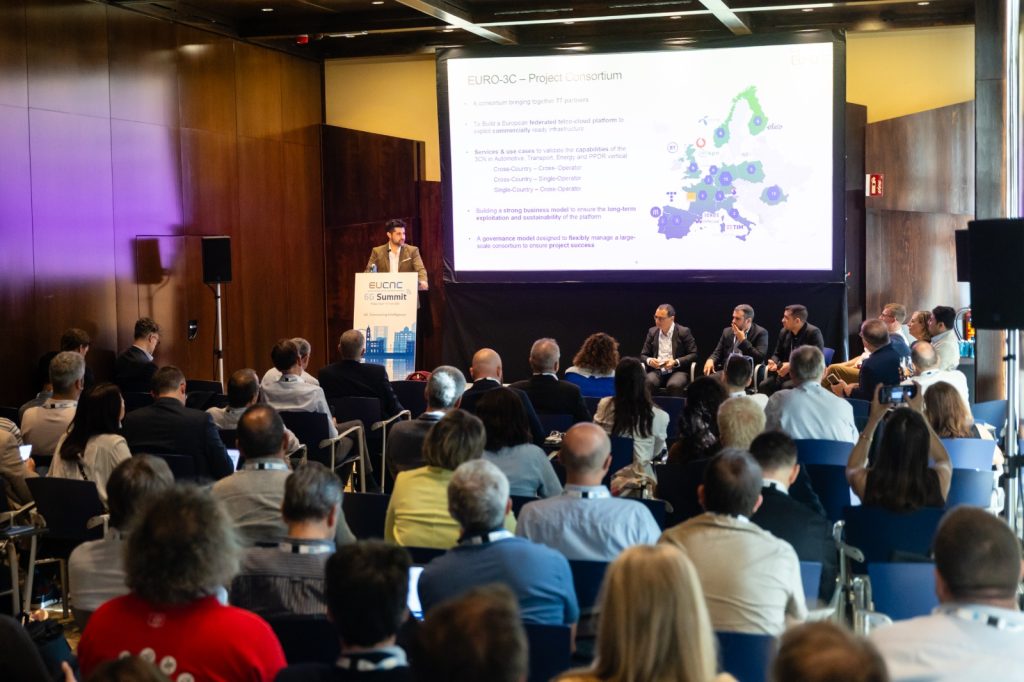
Javier García Rodrigo, Innovation and EU Programmes Manager, Telefónica (EURO-3C project coordination team)
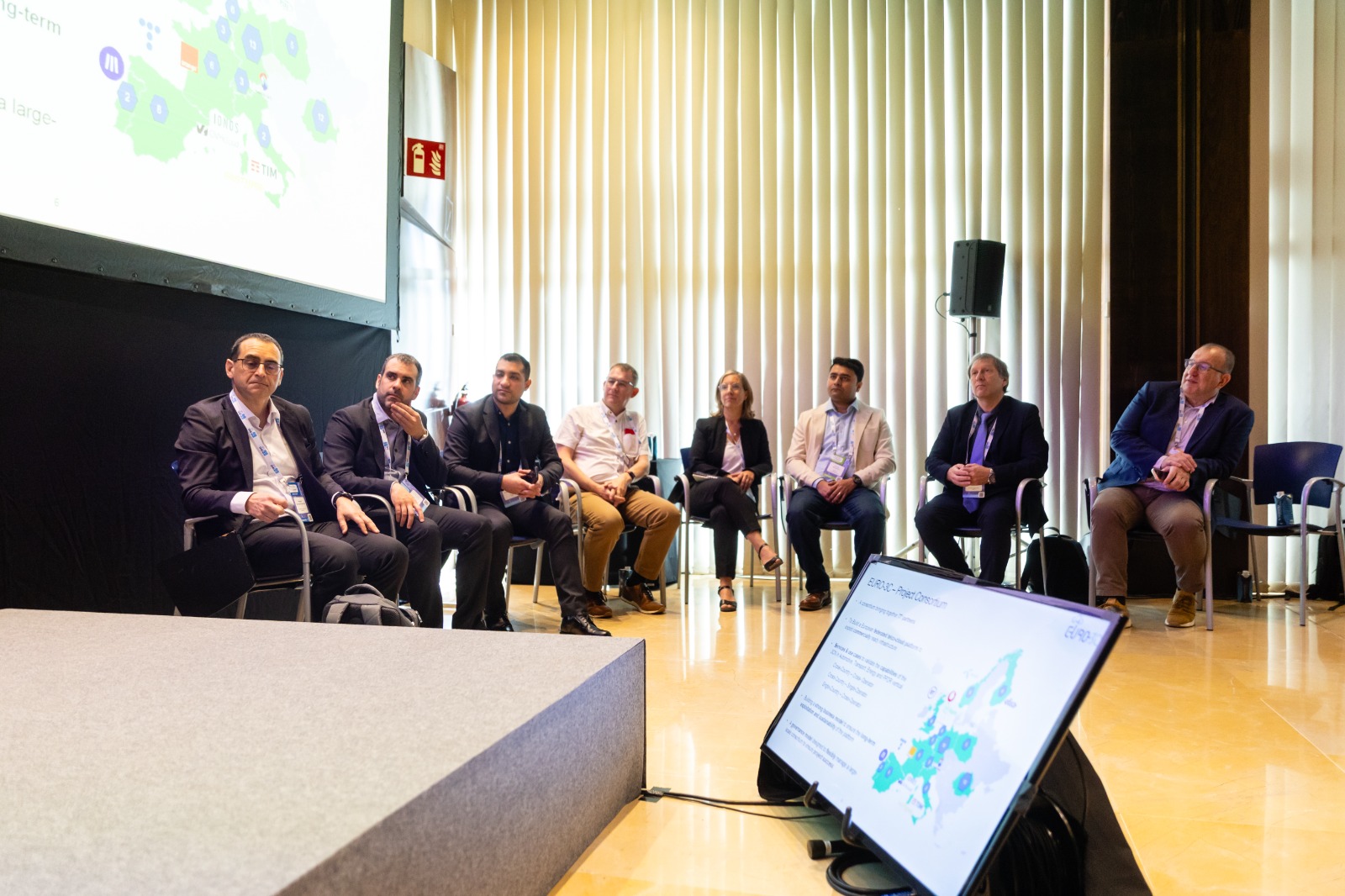
The session was closed by Javier García Rodrigo, Innovation and EU Programmes Manager, Telefónica (EURO-3C project coordination team), who presented an overview of the EURO-3C node deployment landscape and the high-level architecture of the federated infrastructure. He summarised how more than 70 production edge nodes across 13+ countries and 15 providers are being integrated into a unified framework, enabling large-scale validation of the project’s technical and industrial objectives.
Overall, the discussion reflected growing momentum around federated infrastructure models and reinforced EURO-3C’s role in advancing Europe’s transition towards a unified and interoperable digital ecosystem.