EURO-3C Takes Centre Stage at Network X 2026 to Discuss Europe’s Next-Generation Digital Infrastructure
On 15 October 2026, the EURO-3C project took centre stage at Network X 2026 in Vienna, bringing together leading representatives from telecommunications operators, research and standardisation organisations to discuss the future of Europe’s digital infrastructure. The panel discussion, entitled “From Telco-Edge-Cloud to 3CN: Building Europe’s Next-Generation Digital Infrastructure”, explored how federation, open standards and industry collaboration can help Europe move towards a more interoperable, resilient and sovereign Telco-Edge-Cloud ecosystem.
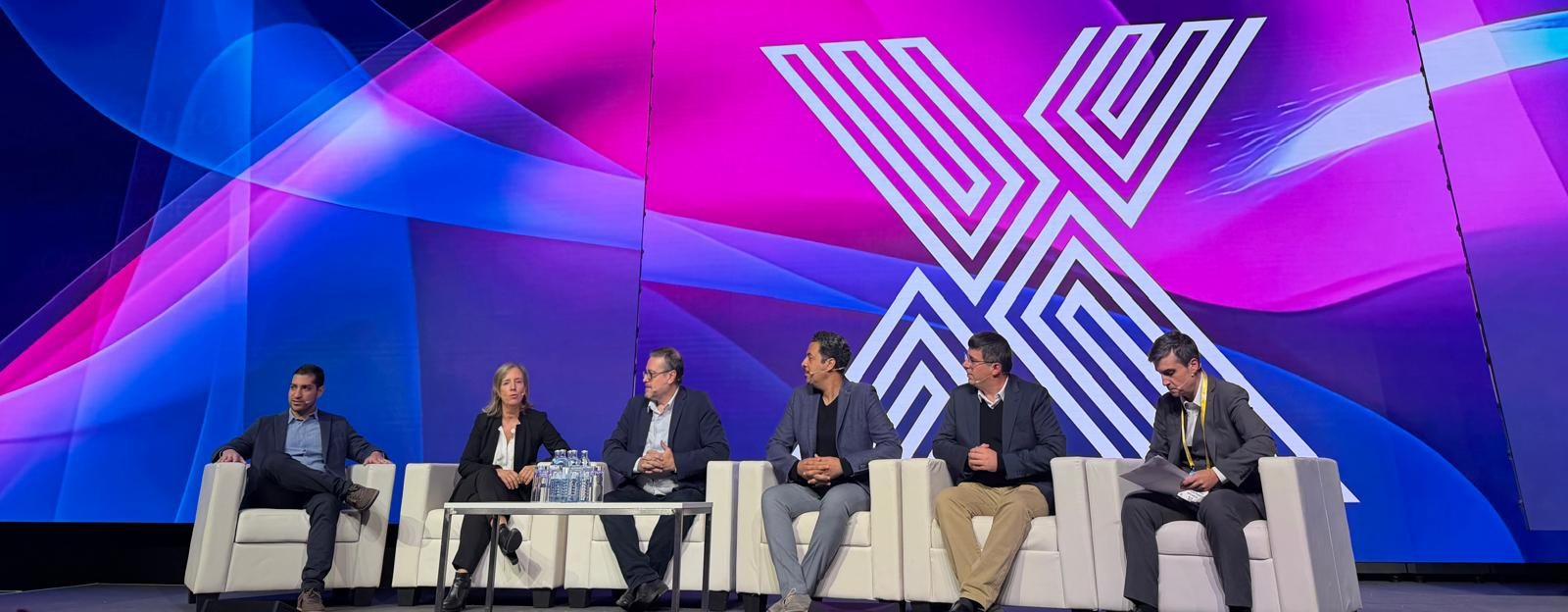
Held as part of the conference’s Headliners programme, the 30-minute session was moderated by Marc Einstein (Counterpoint Research) and featured five experts representing key stakeholders in Europe’s digital transformation:
- Arturo Torrealba, EURO-3C Project Coordinator, Telefónica
- Silvia Almagia, Director of Software and Standards, ETSI
- Ricard Vilalta, ETSI TC NET Convenor, CTTC
- Luis Miguel Contreras Murillo, ETSI SDG TFS Vice-Chair, Telefónica
- Rida Zouaoui, Executive Strategy & Innovation Director, Orange
The discussion opened with a fundamental question: What is EURO-3C trying to build, and why does Europe need it now?
Arturo Torrealba introduced the project’s ambition to establish an open, secure and federated pan-European Telco-Edge-Cloud infrastructure, connecting existing capabilities across operators and technology providers. Rather than building an entirely new infrastructure from scratch, EURO-3C aims to bring together resources that are already deployed across Europe, enabling them to operate as part of a common, interoperable ecosystem.
This approach represents an important opportunity for European telecommunications operators, which have already invested significantly in their networks and infrastructure. By federating these existing assets, operators can extend their geographical reach, offer new services and compete more effectively in the rapidly evolving cloud and edge computing market.
The conversation then turned to the importance of standards and open-source technologies in making such federation possible. Silvia Almagia highlighted the role of ETSI and its open-source initiatives in supporting interoperability across different operators, platforms and technology environments. Common standards and open interfaces are essential to ensuring that services can operate seamlessly across organisational and national boundaries, while avoiding technological fragmentation and vendor lock-in.
Building on this perspective, Ricard Vilalta and Luis Miguel Contreras Murillo discussed the contribution of TeraFlowSDN, an ETSI open-source initiative supporting programmable connectivity and network orchestration. Their exchange addressed the technological foundations required to connect distributed infrastructures and the distinction between capabilities already available and those still being developed to support more advanced federation.
From an operator’s perspective, Rida Zouaoui explored the opportunities that a federated European edge-cloud infrastructure could create for companies such as Orange. Beyond technical integration, the discussion highlighted the importance of developing viable business models, allowing operators to combine resources, expand their service offerings and progressively scale infrastructure investments in line with market demand.
A central theme throughout the panel was the relationship between digital sovereignty, resilience and commercial opportunity.
While reducing dependence on a limited number of global hyperscalers remains an important consideration, the speakers emphasised that European digital sovereignty is not simply about replacing existing providers or excluding international collaboration. It is also about creating greater choice, developing European technological capabilities and ensuring that operators and service providers retain control over their infrastructure, data and operational models.
The discussion also underlined the importance of resilience. Telecommunications networks are critical infrastructure, and federating resources across multiple operators and geographical locations could help strengthen service continuity and reduce dependence on individual providers or systems.
At the same time, the panel recognised that federation must deliver tangible commercial value. By combining existing infrastructure rather than requiring each operator to make substantial investments independently, a federated approach could lower barriers to entry, support more flexible expansion and create opportunities for new services and revenue streams.
Artificial intelligence at the edge emerged as another important dimension of the discussion. As AI applications increasingly require distributed computing resources, low-latency connectivity and greater control over data processing, federated Telco-Edge-Cloud infrastructures could provide an important foundation for their deployment. The speakers considered whether these emerging AI-driven services could help accelerate market adoption and strengthen the business case for federation.
Looking ahead, this EURO-3C panel addressed what operators, technology vendors and policymakers will need to contribute over the next two years to turn this vision into a sustainable European ecosystem. By bringing together operators, standardisation bodies, technology providers and research organisations, EURO-3C is working to demonstrate how federation can move beyond isolated initiatives towards a scalable, open and commercially sustainable European digital infrastructure.