
From EU Cybersecurity Policy to Practice: EURO-3C Takes the Stage in Dublin
 On 6-8 October 2026, the National Cybersecurity Conference took place in Dublin as the flagship event of Ireland’s Cybersecurity Week, organised under Ireland’s Presidency of the Council of the EU. It was designed to bring together senior cybersecurity officials and practitioners to discuss contemporary issues in the field, with a strong EU and international focus. The programme covered digital sovereignty and supply chain security, EU cyber regulation and certification, crisis coordination, and emerging technology, including AI and post-quantum. Its purpose was to turn the EU’s policy ambitions into a practical conversation about delivery.
The audience included senior representatives from government, EU institutions, industry, academia, EU Cyber Range Commanders and the wider European cybersecurity community; over 1,000 people in total. That mix mattered. Regulators, policymakers and the people who build and operate critical cybersecurity services rarely share a room, and the conference put them in one for a full day. A Cyber Expo ran alongside it at the Convention Centre Dublin, showcasing the organisations, researchers and innovators shaping cybersecurity in Ireland and Europe.
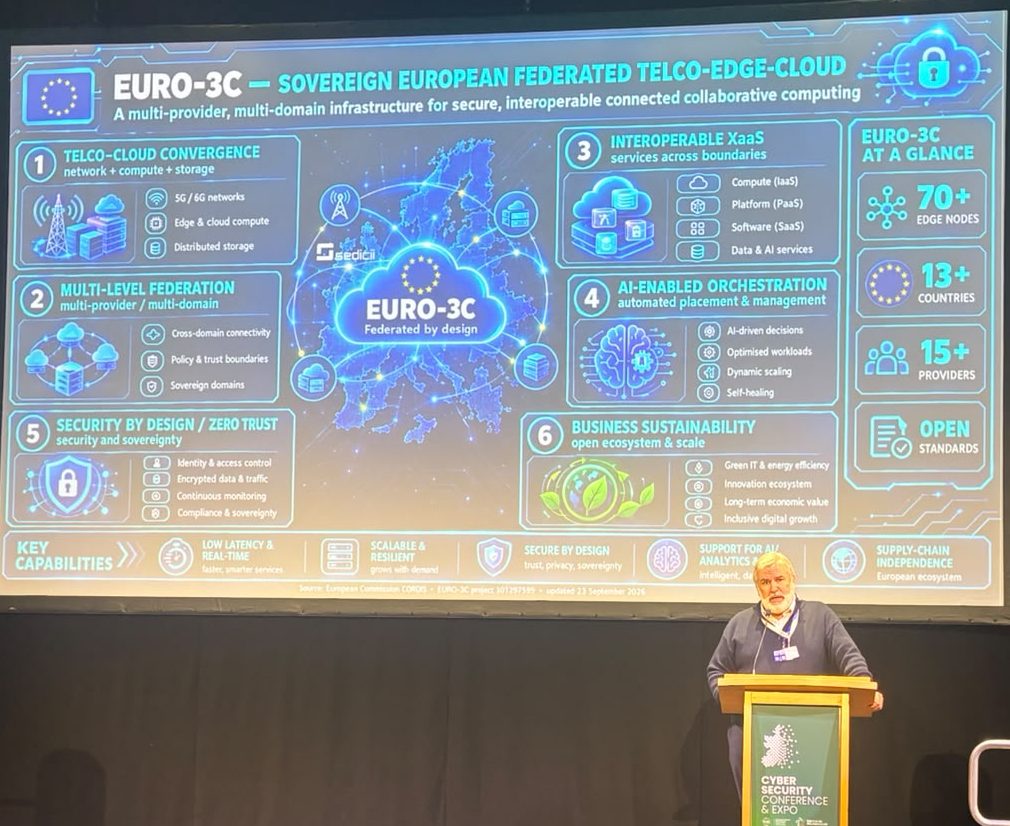
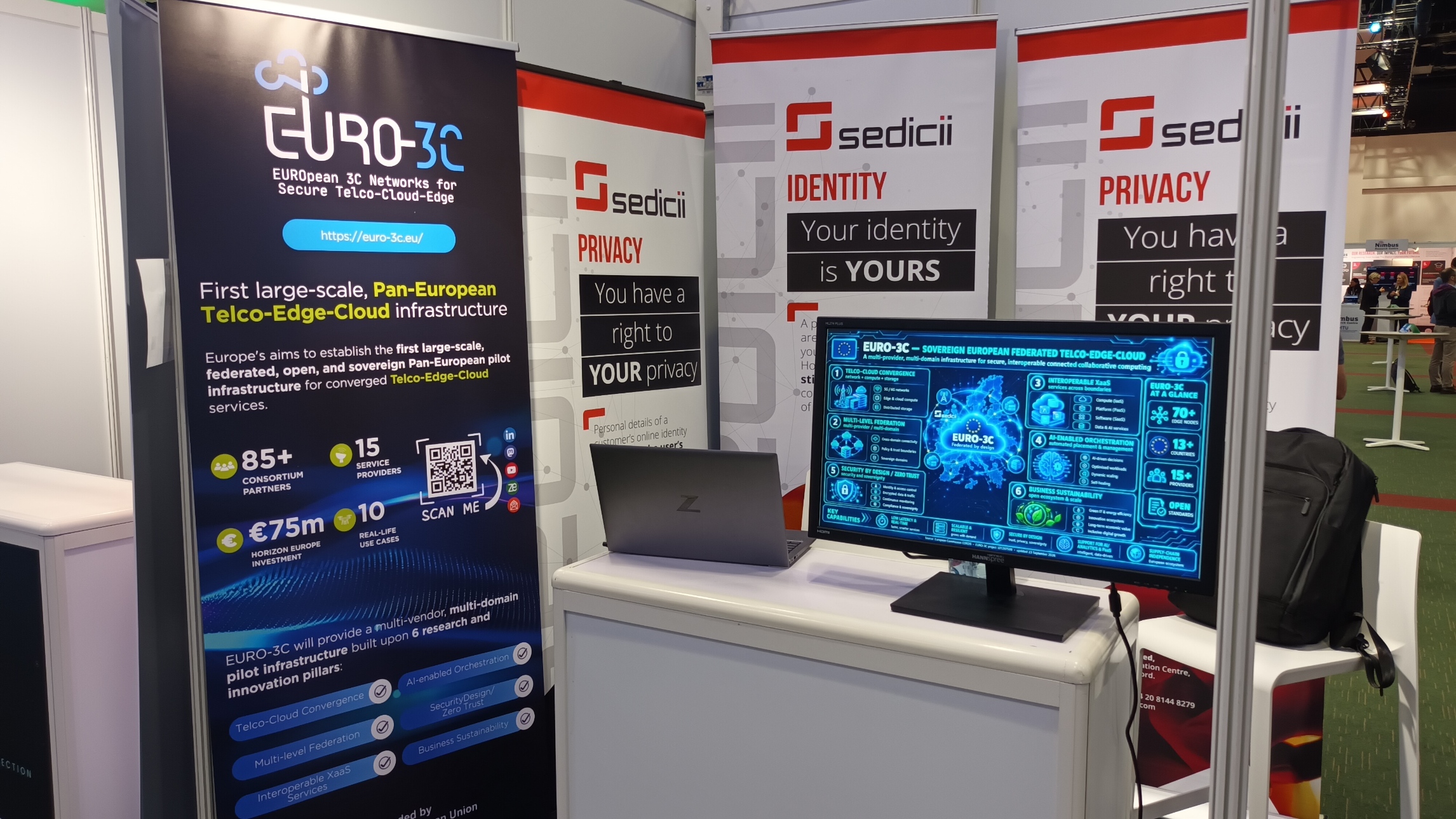
Sedicii, a EURO-3C consortium partner, was also present at the conference, where its CEO, Rob Leslie, introduced the EURO-3C project and its vision for secure, sovereign European digital infrastructure. At its exhibition stand, Sedicii showcased its Zero-Knowledge Proof (ZKP) technology, which enables organisations to verify information and collaborate securely without exposing or exchanging sensitive data. This approach closely aligns with EURO-3C’s ambitions to strengthen privacy, security and trust across Europe’s federated digital infrastructure.
For EURO-3C, an audience like this is the right one. The consortium’s work is complex and ambitious. It is not about adding more security products to a crowded market. It is about showing that trustworthy digital services can be built to meet Europe’s demanding regulatory framework from the start. I had the opportunity to give a presentation that would speak to the people who write, enforce and rely on that framework, and it would show them how the principles on paper translate into working technology.
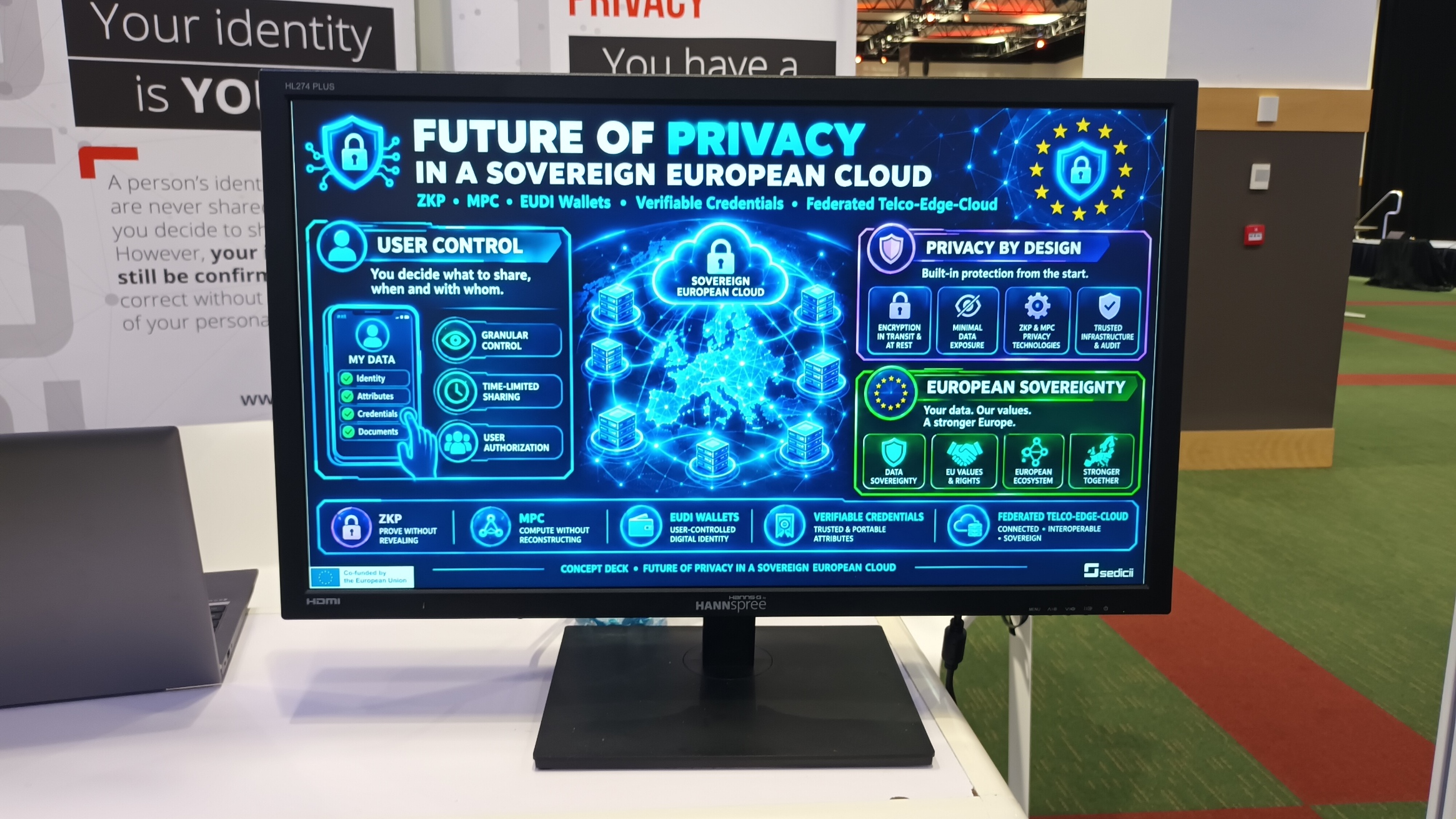
That is where compliance and function becomes the core of the pitch. The Cyber Resilience Act sets security expectations across the lifecycle for the resilience of digital products. GDPR demands rigorous data protection and minimisation. The AI Act introduces obligations for transparency, risk management and accountability. Designing for these three together (and there are more!), rather than retrofitting each in turn, is what makes the EURO-3C approach distinctive. The aim is a service that is compliant by architecture, one that meets EU sovereign requirements more fully than any of the other alternatives on offer today. As Europe pursues digital sovereignty, the case for compliance, built in from the first line of design is hard to ignore.
The work is now underway to turn this ambition into a reality